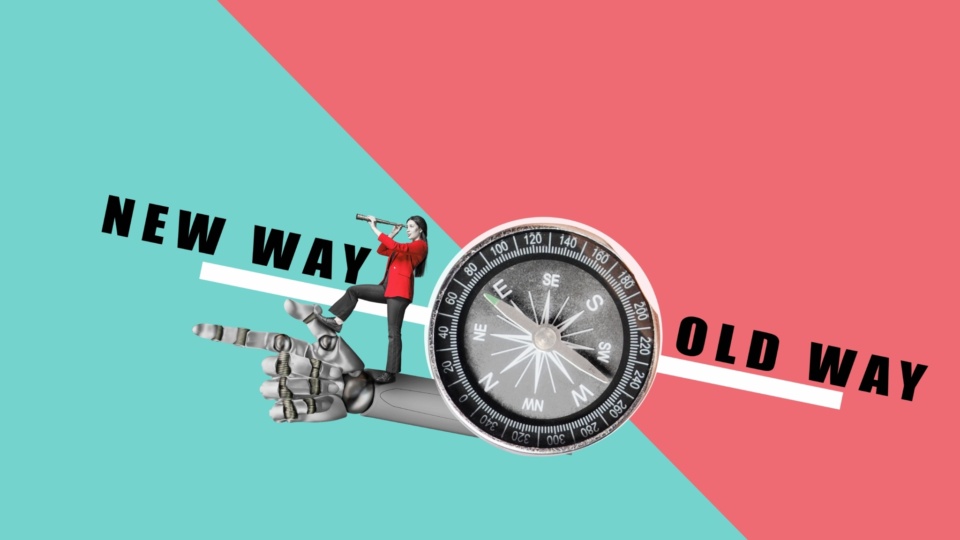
AI and charities: it’s all about purpose
Posted on 30 Sep 2026
There's been a lot of talk about AI this week, and some of it has been frightening. So, is AI good…
Posted on 29 Jul 2025
By Nick Place, Institute of Community Directors Australia

The charity sector must have a strong commitment to innovative and trustworthy governance in order to play a leadership role in Australia’s ever-changing social and economic transformation, Charities Minister Andrew Leigh told a conference this morning.
Delivering the keynote address at the ACNC’s Governing for Good conference on Wednesday morning, Minister Leigh said governance not only was critical to the frontline role charities played in tackling Australia’s challenges, but must be approached with the mindset of enabling success, not just avoiding failure.
“In a country where one in 10 workers is employed in a charity, and millions volunteer, the governance of not-for-profits is not a side conversation,” he said. “It’s a national concern. Governance is what connects trust to impact. It’s how the sector earns its legitimacy, defends its independence, and drives change.”
Leigh told the conference that Australia stood at a critical moment. “Not just for charities, but for the nation,” he said, saying Australia was challenged by everything from artificial intelligence to fiscal constraint, from shifting demographics to climate shocks, from geopolitical uncertainties to pressures on the budget. “The operating environment is changing fast. The pressures are real, but so too is the opportunity to shape a more inclusive, resilient and connected economy.”

“For the charity sector, that transformation is twofold,” he said. “First, it affects you directly. Changing workforce patterns, shifting donor expectations, increasing demand for services, and new forms of accountability are altering how organisations operate.
“Second, it places you at the centre of the national response. Whether it’s climate adaptation, mental health, food security, education or housing, charities are not on the sidelines. You are central to how Australia manages change.
“But to lead that response, you need systems that support adaptation, and that’s where governance comes in. Governance is the bridge between principle and practice. It’s how an organisation ensures that its decisions reflect its values, its risks are understood, its resources are well used, and its people are treated with respect,” he said.
“And governance isn’t static. It evolves. Governance manuals are like gym memberships – we all like having one, but real progress comes from turning up regularly and doing the work.”
The minister sympathised with the challenges the sector faced in trying to keep up with constant social and technological changes.
“These days, every second conference promises to explore the intersection of AI and ethics,” he said. “I’m still waiting for one that explores the intersection of AI and fixing the office printer.
“Whether its AI in housing support, digital tools in education, or data analytics in environmental advocacy, new technologies are reshaping the terrain. Some of the biggest questions facing boards in the next decade won’t be about compliance. They’ll be about design.
“Can we use AI to reach more people without sacrificing human connection? Can we manage data responsibly while also drawing insights to drive policy? Can we stay nimble without becoming reactive?
“Strategic planning in 2025 often feels like trying to write a five-year map with a two-month weather forecast. These are questions of governance, and they are urgent.”
“Strategic planning in 2025 often feels like trying to write a five-year map with a two-month weather forecast. These are questions of governance, and they are urgent.”
Leigh provided several examples of organisations using what he said was great governance matched to innovation to come up with new ways of having an impact.
Wombat Housing, a Melbourne-based housing support service, created a very clever conversational AI tool called Wombot that now handles after-hour queries, directs clients to the right services and allows frontline workers to concentrate on the most critical clients, he said. Cool.org, which provides teaching resources for educators, has developed a sophisticated AI-powered lesson planning tool to greatly free up over-stretched teachers. Clean Up Australia has used AI to analyse its huge volunteer clean-up informational data set, “transforming grassroots energy into policy-grade evidence.”

“The lesson? Good governance doesn’t resist innovation. It channels it. It ensures that new tools serve the mission, not the other way around, and it does so in a way that builds, rather than erodes, public trust,” he said.
Leigh saluted the Australian Charities and Not-for-profit Commission (ACNC) for hosting the Governing for Good conference, which brought together charity leaders, board members, advisers, regulators and advocates.
“The transformation underway in Australia isn’t just the backdrop to your work. It is reshaping the kinds of problems the sector tackles, and how you go about it,” he said. “From boardrooms in Broome to budget meetings in Bairnsdale, Australia’s 60,000 charities are wrestling with similar issues. This forum helps turn those experiences into collective insight,” he said.
“The more charities can adapt, the more communities can cope. The more transparent you are, the more trust you build. The more you learn from each other, the more resilient we all become.”
Posted on 30 Sep 2026
There's been a lot of talk about AI this week, and some of it has been frightening. So, is AI good…

Posted on 30 Sep 2026
After the biggest AFL game of the year, one player proudly wore the flag of his birth country and…

Posted on 30 Sep 2026
At 21 years old, Tate Donohoe is the founder of Ecodia, an AI-assisted software development company…

Posted on 30 Sep 2026
I am checking if this is in the right spot. Let's see.
Posted on 30 Sep 2026
More than 200 fully funded Centre for Social Impact (CSI) scholarships will help equip for-purpose…

Posted on 30 Sep 2026
Personal stories are among the most powerful tools a charity can have to raise funds and awareness,…

Posted on 23 Sep 2026
In his new book Our Place, policy expert Matt Lloyd-Cope argues that housing must be at the heart…

Posted on 23 Sep 2026
There are solutions to counter the rise of One Nation but they might not be residing in the mess…

Posted on 23 Sep 2026
A just-released major global survey of charities has found that demand for charity assistance has…

Posted on 23 Sep 2026
Fresh from welcoming delegates to last week’s Philanthropy Australia conference in Brisbane,…
Posted on 23 Sep 2026
A national strategy to develop Australia's regional cities is needed to break the housing…

Posted on 23 Sep 2026
Eight years after a report to Treasury first suggested the charities regulator should be more…