
AI and charities: it’s all about purpose
Posted on 30 Sep 2026
There's been a lot of talk about AI this week, and some of it has been frightening. So, is AI good…
Posted on 21 May 2025
By Matthew Schulz, journalist, Institute of Community Directors Australia
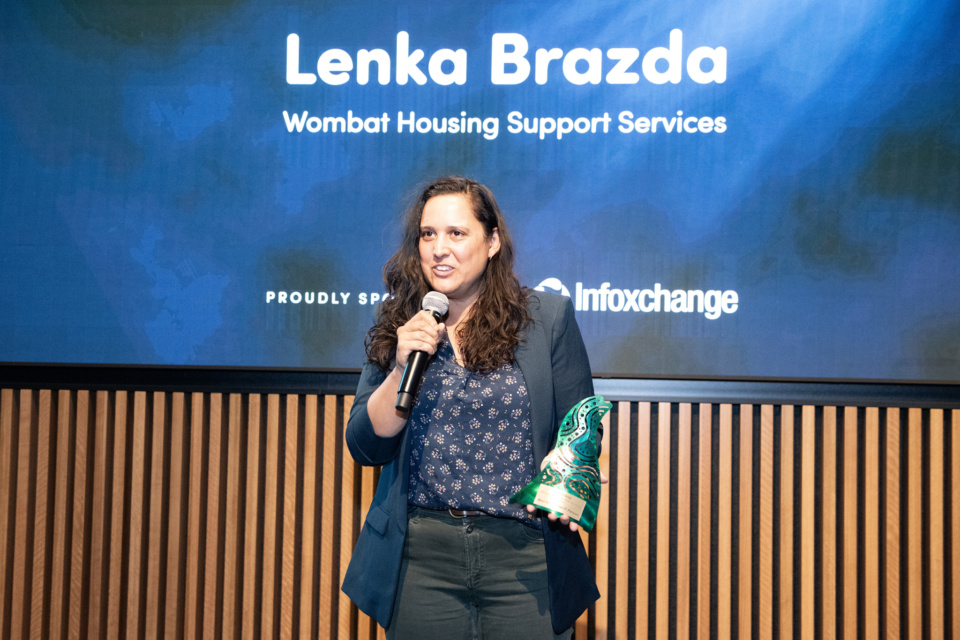
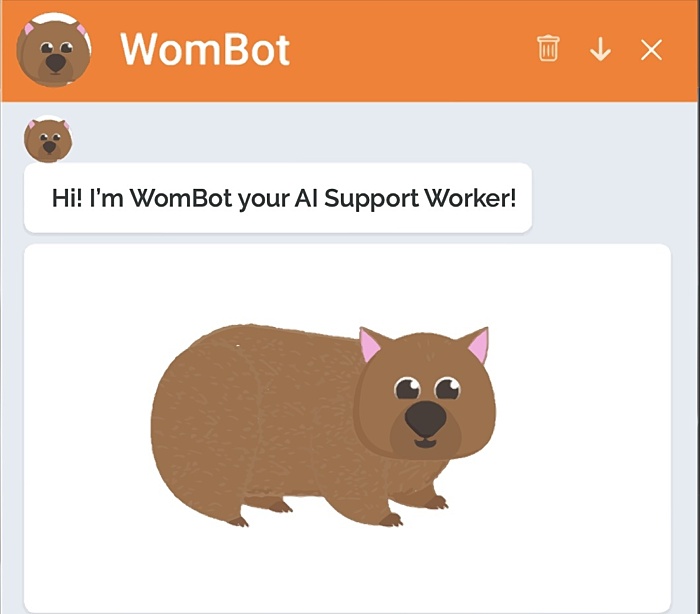
Lenka Brazda, a youth team leader at Wombat Housing Support Services in North Melbourne, has been recognised as Australia’s Best Accidental IT Person for creating WomBot, an artificial intelligence-powered chatbot that helps young people at risk of homelessness.
Brazda, who has no formal background in technology, built the AI assistant to provide round-the-clock housing advice drawn from a carefully curated knowledge base.
She was recognised for the impressive effort at this month’s 2025 Infoxchange Australian Not-for-profit Technology Awards. (Read more about other winners here.)
WomBot has emerged as a practical tool helping users understand housing options, rights, and services—particularly outside business hours, when face-to-face support is limited.
Brazda’s award is a sector favourite, celebrating non-IT staff who have made a significant impact by improving their organisation’s digital systems. Judges commended Brazda for prioritising client needs at every step of the bot’s development.
Brazda in turn praised her managers for backing “what seemed like a very whacky idea at the time.”
“AI is not going away. It’s only gaining traction. Why should we be left behind?"
The idea for WomBot grew from Brazda’s interest in technology and her desire to improve early access to housing support.
“I love technology,” she said. “I don’t think we use it enough in this sector. I wanted a way for people to easily access information before they reach a crisis point.”
The chatbot’s development was iterative, beginning with an online referral form, followed by a scripted bot, and eventually evolving into the AI-powered version launched in October 2024. Since then, WomBot has been used by more than 500 people—entirely through organic traffic, without promotional campaigns.
Brazda said the slow rollout allowed the organisation to stress test the tool with real scenarios which helped improve the system. The organisation is now planning to scale up.
WomBot is underpinned by strict ethical “guardrails”, designed to protect vulnerable users and ensure the accuracy of its advice. The system is trained exclusively on internal documents produced by caseworkers and does not access the internet.
Brazda said there were early challenges with the system going off track.
“Sometimes it would hallucinate, and it was a bit naughty actually,” she said.
“So, I had to ‘tame’ it, so to speak, put in guardrails and think about the information we would allow it to say, and not to say.”
Both Wombat and WomBot follow the same ethical framework.
This was tested in one instance, in which a user asked the bot advice about “Cyclone Alfred”—a topic outside WomBot’s training data. While the bot was not programmed to respond to such a request, it provided basic safety advice.
“So the bot shouldn't really be answering that question, but the caveat is the bot does prioritise safety,” Brazda said. “So in order to prioritise safety, it said, look … I don't really have that information, but because I want you to be safe, here's how you stay safe in that situation.”
The WomBot project was made possible through a grant from the Lord Mayor’s Charitable Foundation. Wombat Housing pitched a prototype to demonstrate its potential, helping secure the funding.
Looking ahead, Brazda hopes to scale the project across the broader community services sector and is actively seeking funding and collaboration opportunities.
“I’d love the bot to be upscaled for the whole community sector, so that is something we’re looking into,” she said. “We’re looking for funding partners and partnering agencies as well.”
Brazda has a message for other not-for-profit (NFP) organisations considering experimenting with digital solutions: “Start small. It’s what we did.”
Wombat adopted an “action-learning framework” during the pilot phase, trialling different methods to create the “building blocks” of the tool, which were then incorporated into the model. Testing also provided great insights into what worked, and what didn’t.
She said the sector must not fear technology.
“AI is not going away. It’s only gaining traction. Why should we be left behind? I think sometimes we're paralysed by the fear of technology and we're so worried about the vulnerable cohort that we work with, but they deserve an excellent service as well.”
“Why wouldn’t we use tools that help our workers and the people we support?”
Posted on 30 Sep 2026
There's been a lot of talk about AI this week, and some of it has been frightening. So, is AI good…

Posted on 30 Sep 2026
After the biggest AFL game of the year, one player proudly wore the flag of his birth country and…

Posted on 30 Sep 2026
At 21 years old, Tate Donohoe is the founder of Ecodia, an AI-assisted software development company…

Posted on 30 Sep 2026
I am checking if this is in the right spot. Let's see.
Posted on 30 Sep 2026
More than 200 fully funded Centre for Social Impact (CSI) scholarships will help equip for-purpose…

Posted on 30 Sep 2026
Personal stories are among the most powerful tools a charity can have to raise funds and awareness,…

Posted on 23 Sep 2026
In his new book Our Place, policy expert Matt Lloyd-Cope argues that housing must be at the heart…

Posted on 23 Sep 2026
There are solutions to counter the rise of One Nation but they might not be residing in the mess…

Posted on 23 Sep 2026
A just-released major global survey of charities has found that demand for charity assistance has…

Posted on 23 Sep 2026
Fresh from welcoming delegates to last week’s Philanthropy Australia conference in Brisbane,…
Posted on 23 Sep 2026
A national strategy to develop Australia's regional cities is needed to break the housing…

Posted on 23 Sep 2026
Eight years after a report to Treasury first suggested the charities regulator should be more…