
Disability savings directed straight to defence in a mixed Budget
Posted on 13 May 2026
There are few surprises in the federal Budget. The flagged reforms are welcome, although…
Posted on 05 May 2025
By Danielle Snelling

It’s time to dial down the commercialisation of Mother’s Day and celebrate a love that endures long after someone is gone, says Danielle Snelling, co-founder and CEO of Motherless Daughters Australia.
For many, Mother’s Day is a joyous occasion, often marked with a nice meal and some heartfelt gifts. But for the 3.9 million Australian women who are grieving their mum, the day is a heavy reminder of what’s missing.
In 2012, my world was torn apart when my mum, Rosa, passed away from a rare form of gynaecological cancer. I was 23. She was 56.
My heart still aches when I think of all the milestones she’ll never witness. While I do my best to hold her memory close, there’s a weight I feel on days like Mother's Day that’s hard to ignore.
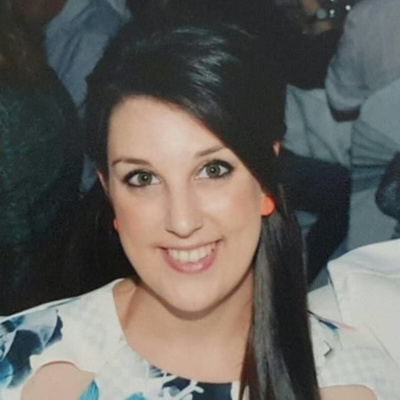
Mother’s Day, in its modern form, originated back in 1908 when Anna Maria Jarvis organised the first official Mother’s Day celebration to honour her late mother, Ann. Anna was determined to make the day a time for people to reflect on the sacrifices mothers make for their children, and to appreciate the role they play in shaping lives. She hoped the day would be filled with genuine gratitude.
Yet today, the original sentiment of Mother's Day seems lost in a sea of sale signs and endless advertisements, all promising the "perfect" gift to show our appreciation.
The overwhelming commercialism of this day makes it increasingly difficult for those of us who no longer have our mothers with us to fully participate. The pressure to celebrate with “the perfect gift” or the “perfect day” is a reminder that there is a void in our lives that can never be filled by a bouquet of flowers.
That doesn’t mean however, we should be excluded from the date altogether.
When I lost my mum, I felt incredibly alone. I searched for people who understood the grief of losing a mother, but I couldn’t find anyone my age who had experienced this kind of loss. Dates like Mother’s Day only amplified that isolation, as it seemed everyone around me was celebrating their mothers while I was quietly grieving.
In 2013, I reached out to a Facebook grief support group, hoping to connect with other women who had lost their mothers. That’s when I met Eloise, who too had lost her mum.
Together, we created Motherless Daughters Australia - a not-for-profit organisation, not just born from the shared pain of losing our mums, but from identifying a gap in the support system and through the hope of making sure no other woman would feel as alone as we did. It became a space where bereaved daughters could be seen and validated, and where their grief could exist outside of societal expectations.
"At its heart, Mother’s Day is still about love – the kind that endures long after someone is gone."
While I’m grateful for the support we’ve been able to offer so many women, I find myself reflecting on how the commercialisation of Mother’s Day can deepen the loneliness for those who’ve lost their mums.
It’s hard to grieve in a world that expects celebration, and steers away from those who are living a different reality. A world filled with sales, gift guides, and smiling posts rarely leaves space for sorrow. The unspoken message is clear: if you're not celebrating with flowers or a family lunch, somehow, you're not doing Mother’s Day right.
Mother’s Day didn’t begin this way. It wasn’t always about what could be bought or posted on social media. It was created to honour all mothers from a place of deep love and reflection – a love that doesn’t require gifts, and reflection that doesn’t need to be loud.
The date was meant to reflect the everyday, often unseen, sacrifices of all mothers – and to recognise how deeply they shape the people we become.
This year, I hope people take a moment to acknowledge those whose mothers are no longer here, even if it makes you feel uncomfortable. A small gesture of care, a kind word, or simply an understanding nod can mean the world to someone navigating grief in the middle of a national celebration.
Through Motherless Daughters Australia, we’re helping Australians understand that grief is not brief and doesn’t follow a set timeline. It lingers, shifts, and resurfaces – especially on days like this. We need to make dates like Mother’s Day more inclusive, and that starts with the community acknowledging the experience of those who are grieving, instead of steering away from the topic completely.
At its heart, Mother’s Day is still about love – the kind that endures long after someone is gone. The kind of love that deserves just as much space in the world as any bouquet or card; because all Mums deserve to be remembered on Mother’s Day, including those who have died, and not just those we can physically see.
Danielle Snelling is co-Founder and CEO of Motherless Daughters Australia, whose aim is to support women, girls, and families experiencing the distress and lifelong impact caused by mother loss. They believe that with support, guidance and resources, motherless daughters feel less alone and more supported and understood in their life journey.
Posted on 13 May 2026
There are few surprises in the federal Budget. The flagged reforms are welcome, although…
Posted on 13 May 2026
Is it possible that Australians are revelling in demented hysteria at the moment, imagining all…

Posted on 13 May 2026
Doug Taylor, the CEO of The Smith Family, a children’s education charity, and also a teacher of…

Posted on 06 May 2026
$386 billion is quite a chunk of change. That's how much is earmarked for the AUKUS defence deal…

Posted on 01 May 2026
In all charities and NFPs – big and small – annual budgeting brings with it a degree of…
Posted on 29 Apr 2026
The creeping division, hostility and racism in our society were on horrible show last weekend when…

Posted on 22 Apr 2026
Don't be afraid to explore the ways that AI can help your not-for-profit. It would be remiss of a…

Posted on 21 Apr 2026
Earlier today, federal charities minister Andrew Leigh delivered a keynote speech, 'Bequests,…

Posted on 15 Apr 2026
One of the most important lessons from the covid 19 pandemic was to ask for what is needed. This…
Posted on 15 Apr 2026
Not-for-profit leader Ryan Ginard says that if luck made Australia wealthy, generosity will keep it…

Posted on 08 Apr 2026
It doesn't seem unreasonable to ask our political parties to actually outline their policies, what…
Posted on 08 Apr 2026
In the 100th issue of the Quarterly Essay, Sean Kelly asked questions of Labor, and specifically…