
AI and charities: it’s all about purpose
Posted on 30 Sep 2026
There's been a lot of talk about AI this week, and some of it has been frightening. So, is AI good…
Posted on 20 Aug 2025
By Nick Place, journalist, Institute of Community Directors Australia

The treasurer’s economic roundtable is into its second day, with today’s sessions focused on productivity and, this afternoon, AI and innovation, two areas that Charities Minister Andrew Leigh has shown enthusiasm for, in comments heading into the roundtable.
Productivity Commission chair Danielle Wood is scheduled to address the attendees at the start of today’s roundtable. Kelly O’Shanassy, CEO of the Australian Conservation Foundation, and Michael Brennan, CEO of the e61 Institute, a not-for-profit economic policy research centre, will be prominent in today’s first session, speaking on finding improved ways of managing regulation and approvals.
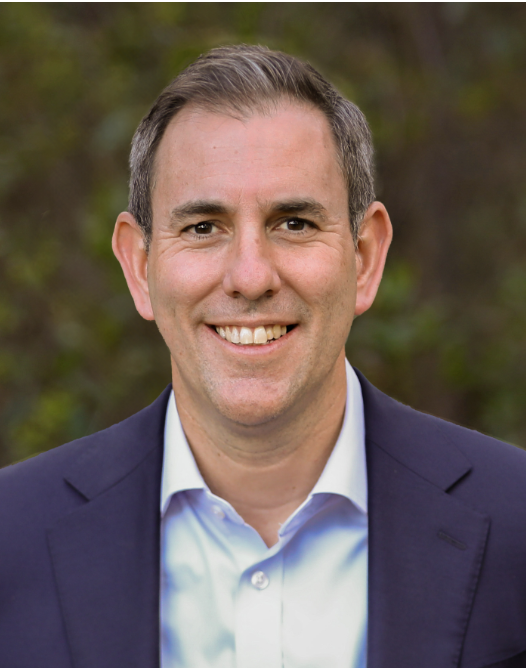
“At the start, we’ll be talking about regulation and approvals, making sure regulation is serving a useful purpose,” the Treasurer, Dr Jim Chalmers, said in a statement. “Making sure approvals can be quicker without ignoring our responsibilities to community or to the environment. How can we quicken the pace of approval so that we can build more of the stuff that we all want to see in our economy?”
In pre-summit charity sector roundtables, the need for smoother, streamlined regulations was a key message from sector leaders to the government.
Day one’s deliberations, on the theme of resilience, were clearly not all a collegiate love-in. The Australian Financial Review reported that industry and employer groups pushed back hard on an ACTU proposal to tax businesses with an annal turnover of more than $500,000 with a worker training levy.
But mostly, the room seems to be tuned into trying to find meaningful improvements to Australia’s economy, funding, productivity and regulations. Treasurer Chalmers thanked attendees at the end of the first day for bringing the right spirit to the room, and said he could see consensus emerging in areas of debate.
For the CEO of the Australian Council of Social Service (ACOSS), Dr Cassandra Goldie, who is representing the community sector at the roundtable, the objectives heading into the room were clear.
“This roundtable is an historic opportunity to make Australia a fairer, better country, both for people and for the planet,” she said, before taking her place at the table. “We must move beyond sectoral interests and build consensus around solutions to lift the living standards of our community, especially those with the least.”
“Discussions about productivity cannot be separated from discussions about the kind of society we want to live in.”
“Discussions about productivity cannot be separated from discussions about the kind of society we want to live in,” Goldie said. “Many members of our community have experienced an unprecedented fall in their living standards, and they need meaningful reform.”
In the lead-up to the roundtable, Goldie outlined ACOSS priorities, including reformed employment opportunities, better access to social housing, strong climate targets, and investment to deliver faster benefits to households, such as reduced energy prices and consumption.
However, Goldie’s wish for improved living standards flowing from productivity reforms jarred with findings in a new report by the McKell Institute, which found that Australia’s retail workers had delivered a 26 per cent boost in productivity since 2007, only to see their wages go backwards in real terms.
Commissioned by the Shop, Distributive & Allied Employees’ Association, the report said real wages had fallen by one per cent since 2007, which meant a 27 per cent “productivity debt” for retail workers.
“It’s correct to say that Australia needs to improve its productivity, but it’s incorrect to claim that this will necessarily do anything to directly benefit the average person,” said McKell Institute chief executive Edward Cavanough.
“Productivity is important, but Australia doesn’t yet have the policy architecture in place that ensures productivity gains flow through to workers’ living standards,” he said.
The report recommended the government establish a formal “productivity dividend” to ensure workers benefit from productivity gains, through means such as wise wages, increased leave entitlements or shorter working hours, and that mandatory reporting of “productivity debt” be established for large firms.
Since 2007, the total annual earnings for retail workers have fallen by $400 per year, in real terms, according to the report, while at the same time, profits in the industry have increased by $22 billion in real terms.
Posted on 30 Sep 2026
There's been a lot of talk about AI this week, and some of it has been frightening. So, is AI good…

Posted on 30 Sep 2026
After the biggest AFL game of the year, one player proudly wore the flag of his birth country and…

Posted on 30 Sep 2026
At 21 years old, Tate Donohoe is the founder of Ecodia, an AI-assisted software development company…

Posted on 30 Sep 2026
I am checking if this is in the right spot. Let's see.

Posted on 30 Sep 2026
More than 200 fully funded Centre for Social Impact (CSI) scholarships will help equip for-purpose…

Posted on 30 Sep 2026
Personal stories are among the most powerful tools a charity can have to raise funds and awareness,…

Posted on 23 Sep 2026
In his new book Our Place, policy expert Matt Lloyd-Cope argues that housing must be at the heart…

Posted on 23 Sep 2026
There are solutions to counter the rise of One Nation but they might not be residing in the mess…

Posted on 23 Sep 2026
A just-released major global survey of charities has found that demand for charity assistance has…

Posted on 23 Sep 2026
Fresh from welcoming delegates to last week’s Philanthropy Australia conference in Brisbane,…
Posted on 23 Sep 2026
A national strategy to develop Australia's regional cities is needed to break the housing…

Posted on 23 Sep 2026
Eight years after a report to Treasury first suggested the charities regulator should be more…