
AI and charities: it’s all about purpose
Posted on 30 Sep 2026
There's been a lot of talk about AI this week, and some of it has been frightening. So, is AI good…
Posted on 16 Jul 2025
By Nick Place, journalist, Institute of Community Directors Australia

As debate continues over what percentage of its money a Private Ancillary Fund (PAF) should be required to distribute to charities each year, one of Australia’s leading philanthropists has said PAFs were never intended to be “forever funds”.
Leading philanthropist Alan Schwartz told the Community Advocate that when the funds were introduced (as Prescribed Private Funds) in March 2001, it was for a specific purpose: to allow families or individuals who had a windfall to stretch their giving over an extended time period to get tax benefits, instead of having to donate it all in that financial year.
“It might be that they had sold a business or a property and had a windfall gain, and they could either pay a lot of tax or give to a cause, but they might not have had time to think about where they would want that money to go to,” he said. “The PAFs were a way to spread that giving out, but they were not intended to create perpetual trusts.”
With the government’s consultation process closing in 16 days, debate is ramping up over whether PAFs (or Giving Funds) should be forced to donate more than the currently mandated five per cent of their accumulated funds each year.
Some have suggested the Treasury is looking at lifting the mandatory donation rate to as high as 8 per cent, even though some say the current five per cent is the appropriate figure.
Alan Schwartz said he found five per cent to be an ambiguous signal of policy makers’ intentions. “If the figure was 10 per cent, it would be clear that the government expects funds to spend down. If it was two or three per cent, it would be so they could maintain their liquidity forever,” he said. “This whole thing is a public policy question. It seems the government has observed, rightly, that some funds continue to grow despite distributions, which was never the intent.”
Deborah Henderson from the Institute of Public Affairs has written in the Australian Financial Review that the government’s plan to raise the mandatory distribution would risk “long-term harm to the entire [philanthropic] eco-system.”
“It seems the government has observed, rightly, that some funds continue to grow despite distributions, which was never the intent.”
The debate is playing out at the same time as Bill Gates has voluntarily tumbled out of the world’s top 10 richest people list because he donated $51 billion last week, as part of his stated objective to give away his entire fortune.
Charities Minister Andrew Leigh has made his position clear: he would like PAFs to unlock more of their hoarded treasure to help the charity sector immediately, not decades from now after years of conservative asset management.
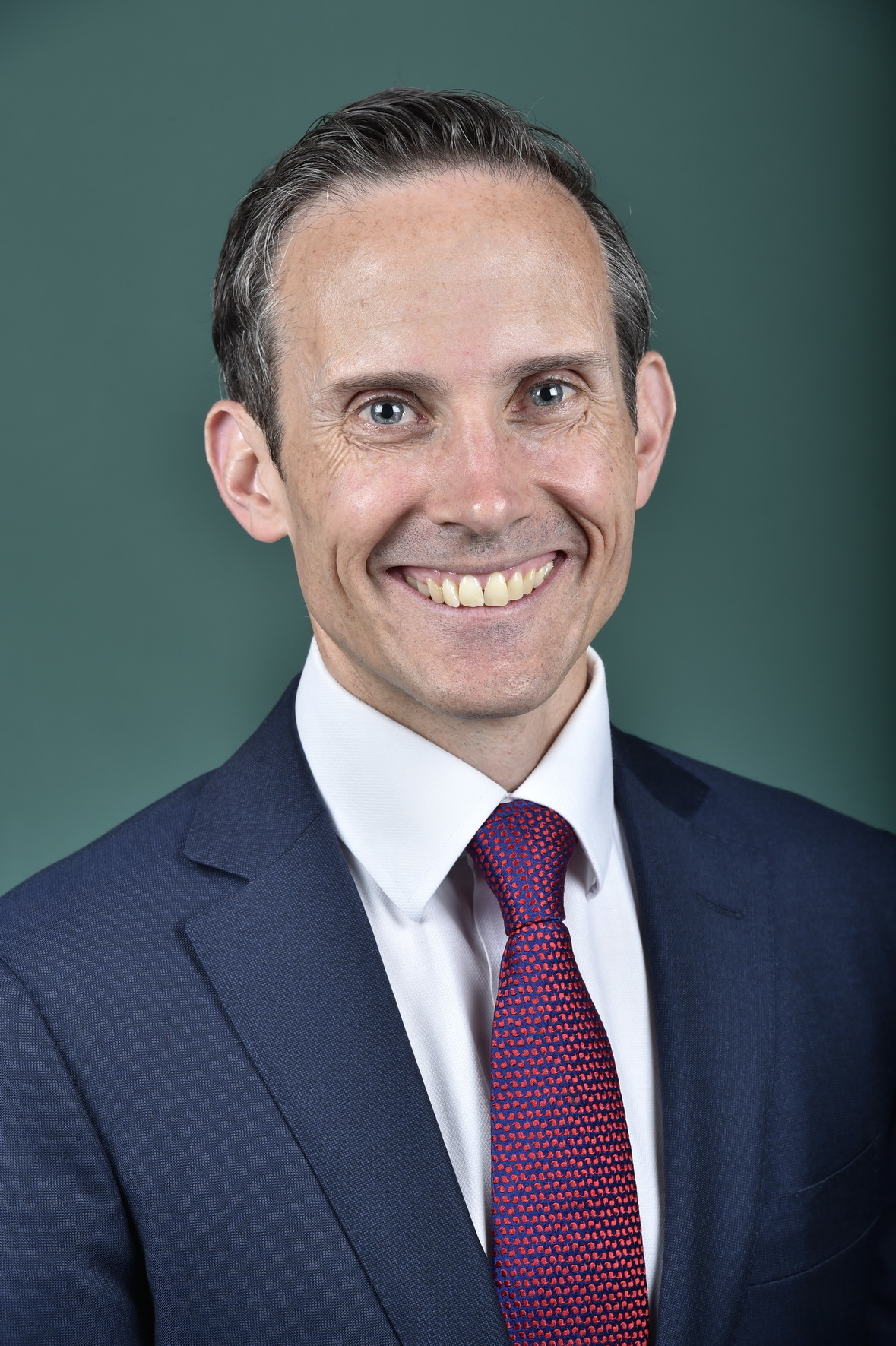
Leigh’s goal is to ensure the considerable tax concessions offered to families and individuals who divert funds into their PAFs instead of into taxation translate to generous and timely financial support of the charitable sector.
On the weekend, the Australian Financial Review raised the stakes by publishing details of just how much money is locked away in PAFs run by Australia’s wealthiest individuals, families and foundations. It also reported that about 850 of Australia’s 2200 PAFs, including the Rinehart, Medich and Lowy families’ funds, do not disclose information about their actual size, or donations.
The Productivity Commission had previously estimated that $11.6 billion was held in PAFs in 2020–21, with about half those distributing five to six per cent annually.
The non-disclosure by some funds emphasises the government’s disquiet about whether the charity sector is receiving optimal benefit from the tax benefits of the PAF system. With an estimated $7 billion in potential taxes diverted instead to PAFs in the 25 years since the funds were introduced, PAF holders not only receive a major tax break but retain control over where and when their money is donated over time.
The Treasury Department and the Productivity Commission are both reportedly unhappy that some PAFs seem more intent on growing and future-proofing their corpus into “forever funds” than they are on actively supporting charities, beyond the legal requirement of 5 per cent per year. Major philanthropist Daniel Petrie agreed, arguing in the AFR that there was no reason PAFs couldn’t grow their capital and still dramatically increase their annual impact.
The chair of the Paul Ramsay Foundation, Michael Traill, said his foundation took the view that while it was great if PAF’s wanted to donate more than the currently mandated 5 per cent of funds per year, they had issues with officially locking in the extra giving.
Posted on 30 Sep 2026
There's been a lot of talk about AI this week, and some of it has been frightening. So, is AI good…

Posted on 30 Sep 2026
After the biggest AFL game of the year, one player proudly wore the flag of his birth country and…

Posted on 30 Sep 2026
At 21 years old, Tate Donohoe is the founder of Ecodia, an AI-assisted software development company…

Posted on 30 Sep 2026
I am checking if this is in the right spot. Let's see.

Posted on 30 Sep 2026
More than 200 fully funded Centre for Social Impact (CSI) scholarships will help equip for-purpose…

Posted on 30 Sep 2026
Personal stories are among the most powerful tools a charity can have to raise funds and awareness,…

Posted on 23 Sep 2026
In his new book Our Place, policy expert Matt Lloyd-Cope argues that housing must be at the heart…

Posted on 23 Sep 2026
There are solutions to counter the rise of One Nation but they might not be residing in the mess…

Posted on 23 Sep 2026
A just-released major global survey of charities has found that demand for charity assistance has…

Posted on 23 Sep 2026
Fresh from welcoming delegates to last week’s Philanthropy Australia conference in Brisbane,…
Posted on 23 Sep 2026
A national strategy to develop Australia's regional cities is needed to break the housing…

Posted on 23 Sep 2026
Eight years after a report to Treasury first suggested the charities regulator should be more…