
Sector on alert as sophisticated scams target NFPs
Posted on 30 Sep 2026
I am checking if this is in the right spot. Let's see.
Posted on 18 Feb 2026
By Nick Place, journalist, Community Directors
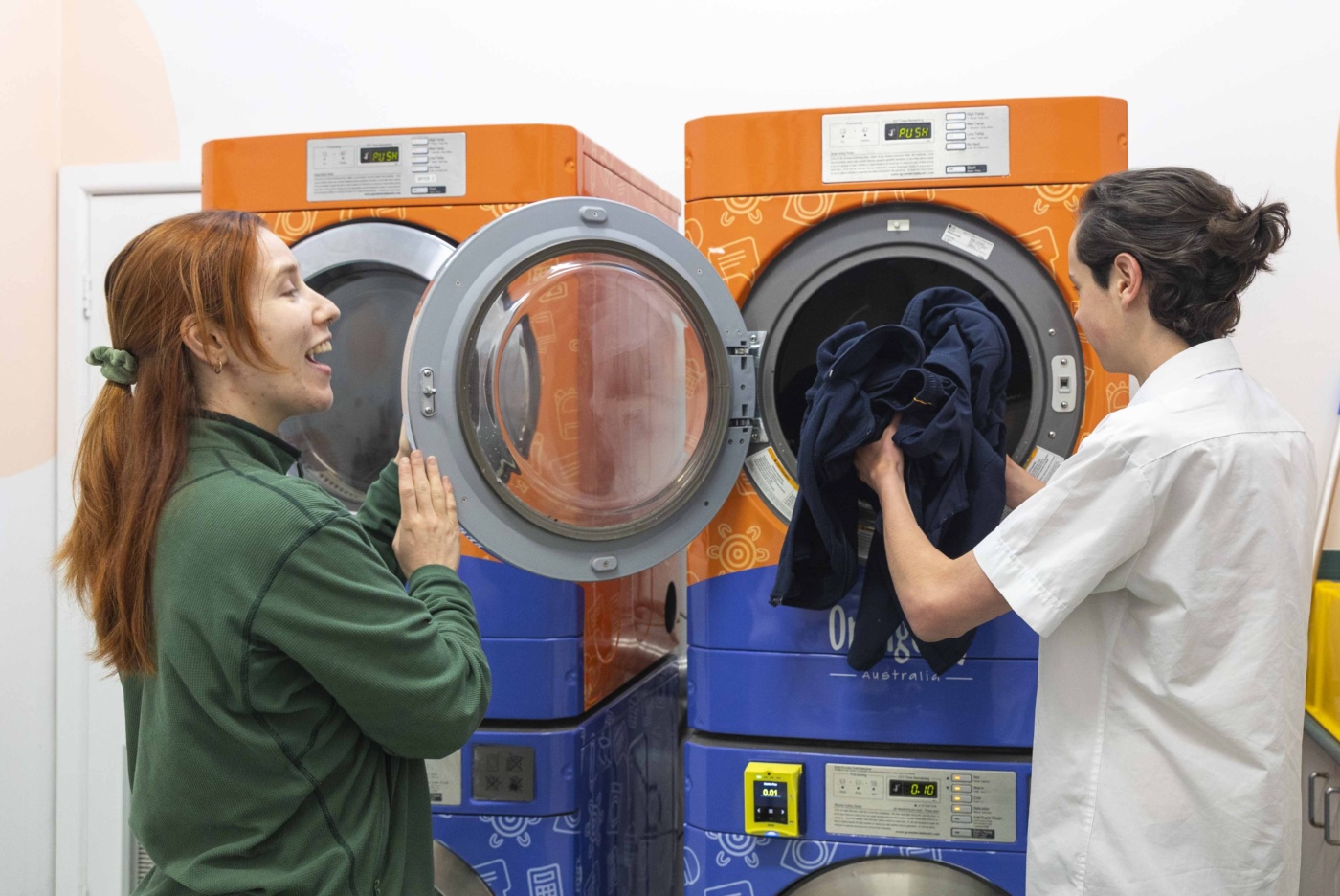
Australia’s champion laundry van charity, Orange Sky, has announced it is ready to expand into school-based support, after the success of two pilot programs.
Orange Sky’s transformational specialist and school laundry program lead Katie Lavidis said the organisation hoped to have variations of the new program in 20 schools by the end of the calendar year.
“We’ve had two schools running for between 12 and 18 months, and now have launched four more schools, and we have inquiries so far from 19 schools,” she said. “It’s had a strong reaction.”
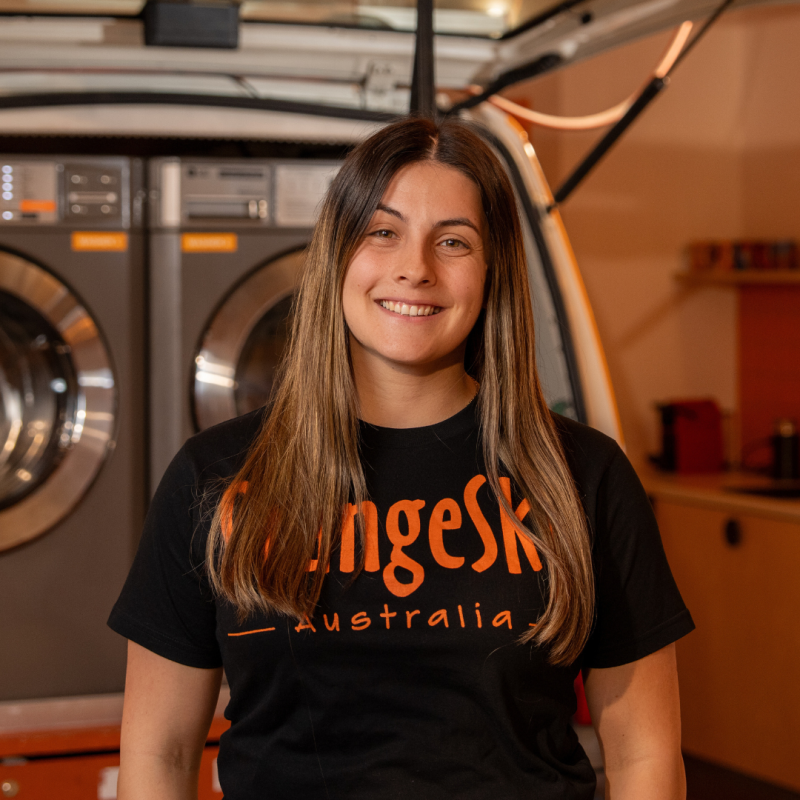
“We’ve seen the power of having clean clothes at Orange Sky for a long time,” she said. “It can make you feel more confident, ready for the day, able to navigate whatever the day brings. But for students specifically, we’re seeing that students are more confident to fit in with their peers.”
Economic Evaluation Australia studies have shown that hygiene issues can negatively impact the well-being of young people, leading to isolation from peers, bullying, reduced attendance, and lower educational attainment, she said. Children suffering from hygiene poverty were found to miss 13 days more school per year than their peers, and often suffered academically.
During the pilot program, Lavidis said there was one student, living with neurodiversity, who felt comfortable to join sport or science classes only when he knew he had personally washed his athletic clothes or lab coat. Before the machines arrived, he was not participating in those classes.
That’s before you get to students who are rough sleeping or whose families are living in poverty.
“We know that young people are disproportionately affected by homelessness,” Lavidis said, quoting Australian Institute of Health and Wellbeing statistics that show 28 per cent of people accessing specialist homelessness services are under the age of 18.
“There are students whose families are experiencing homelessness, and there are students in out-of-school care that we’re hearing from the teachers are using the machines,” she said. “But on top of that, we’re seeing a lot of students experiencing poverty who do have a roof over their head, but their parents are struggling financially and they can’t maybe afford a new washing machine if it breaks, or they can’t afford to go to the laundromat.”
“It’s the great equaliser to have clean uniform and clothes. Just also having clean bedding. It builds so many things for young people.”
It is not only students who have benefited. An unexpected finding from the pilot was the number of school staff accessing the machines. “We just assume the adults don’t need that; however, there are staff members that are struggling at home and facing challenging times,” said the business manager of a school in Frankston, Victoria.
Orange Sky established itself as a service providing vans with in-built industrial washing machines and dryers for people sleeping rough or lacking the facilities or budget to clean their clothes and other laundry. But after fielding a query from that school in Frankston, it decided to explore this new path.
“A teacher from Frankston emailed us saying, ‘We’ve applied for grants, we’ve seen students arrive in dirty uniforms, some teachers have been taking student clothes home to wash it where they can, but we don’t feel like we can do enough for these students. Would Orange Sky have any advice for us?’” Lavidis said.
“We had some second-hand machines and a team in place to launch what we would call a very, very loose test program. We installed the washing machines and dryers in the school and then co-piloted it with them, co-designed the whole thing with the school and the teachers to make sure it worked for them, worked for Orange Sky and, most importantly, worked for the students.”
The six machines at the school have churned through more than 600 loads of laundry since installation, and the pilot program has been expanded beyond the junior campus to the senior campus.
A teacher at the school said, “Sometimes students have situations at home that prevent them from coming to school in clean uniforms, and so being able to come in and independently care for themselves re-engages them into education, and back into the school community.
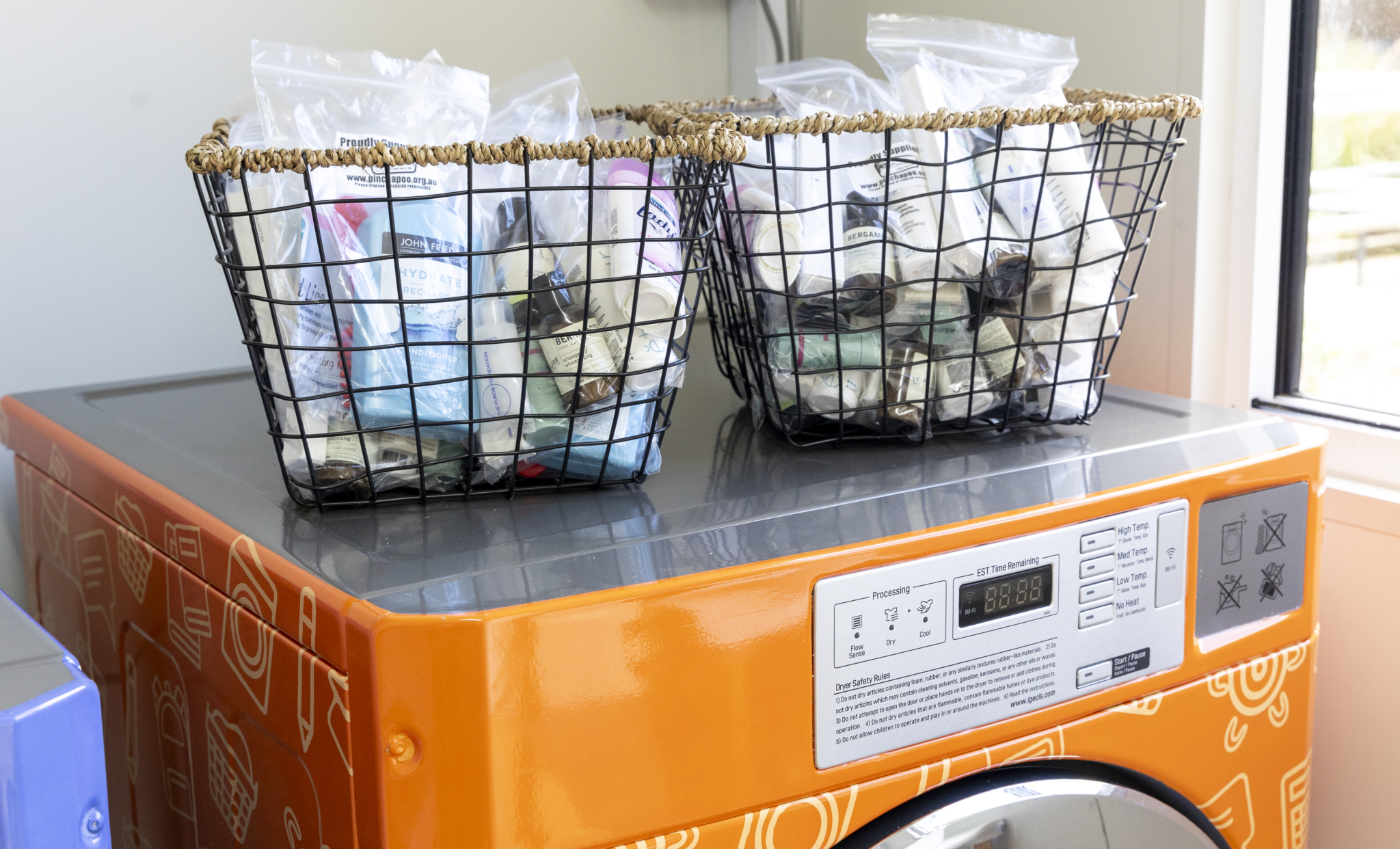
“It’s the great equaliser to have clean uniform and clothes, also having clean bedding. It builds so many things for young people.”
The decision to install machines in schools was a major step for Orange Sky, and it shook up its operating model.
“We didn't want a cut and paste solution,” Lavidis said. “We considered taking a van to a school and then we decided that wasn’t the best solution for young people.” With the size of the schools involved, the limited number of volunteers available during the day to manage vans, and the need to ensure volunteers had valid Working with Children Checks (blue cards), it was logistically prohibitive. She also said the big orange vans were hard to miss, which might have stigmatised students seen to be approaching them. In the end, installing machines was the best way forward.
A parallel pilot in a second school, in Springfield, Queensland, took a different direction. First Nations-focused, the Springfield school is kindergarten-to-year-12 (K-12), meaning questions arose about the age appropriateness of children doing laundry. The solution was to allow parents and families to book time with the machines so they could come to the school before classes to do laundry. “It means that families can bring the laundry for the younger children, and for the family,” Lavidis said. “The parents and siblings are able to wash their laundry, and they can bring it onto school grounds before school and do the washing on behalf of the family, so that adults will be doing the washing.”
In Orange Sky’s street-based work with the vans, a major part of the job is having conversations and building relationships with people as the machines do their work. But at the schools, Orange Sky has stepped back, and has no daily involvement. “Connection looks different to what it would look like in a normal Orange Sky shift, but we still see a connection as students are coming in, they’re connecting with their teachers, their families may be coming in and connecting with those teachers,” Lavidis said. “As a result of it, they’re able to connect better with their peers.”
Posted on 30 Sep 2026
I am checking if this is in the right spot. Let's see.
Posted on 30 Sep 2026
More than 200 fully funded Centre for Social Impact (CSI) scholarships will help equip for-purpose…

Posted on 30 Sep 2026
Personal stories are among the most powerful tools a charity can have to raise funds and awareness,…

Posted on 23 Sep 2026
A just-released major global survey of charities has found that demand for charity assistance has…
Posted on 23 Sep 2026
Fresh from welcoming delegates to last week’s Philanthropy Australia conference in Brisbane,…

Posted on 23 Sep 2026
A national strategy to develop Australia's regional cities is needed to break the housing…

Posted on 23 Sep 2026
Eight years after a report to Treasury first suggested the charities regulator should be more…

Posted on 17 Sep 2026
Australia’s biggest gathering of philanthropists, which drew more than 1200 delegates to Brisbane…
Posted on 16 Sep 2026
A new partnership between Paul Ramsay Foundation (PRF) and Atlassian Foundation aims to attract…

Posted on 16 Sep 2026
While there is no shortage of studies examining not-for-profits from every angle, a new research…

Posted on 16 Sep 2026
Tourism is a large source of income for Kangaroo Island, 210 km south-west of Adelaide, but the…
Posted on 16 Sep 2026
In the face of challenging conditions in the giving sector, UNICEF Australia chief executive Tony…