
AI and charities: it’s all about purpose
Posted on 30 Sep 2026
There's been a lot of talk about AI this week, and some of it has been frightening. So, is AI good…
Posted on 10 Dec 2024
By Greg Thom, journalist, Institute of Community Directors Australia

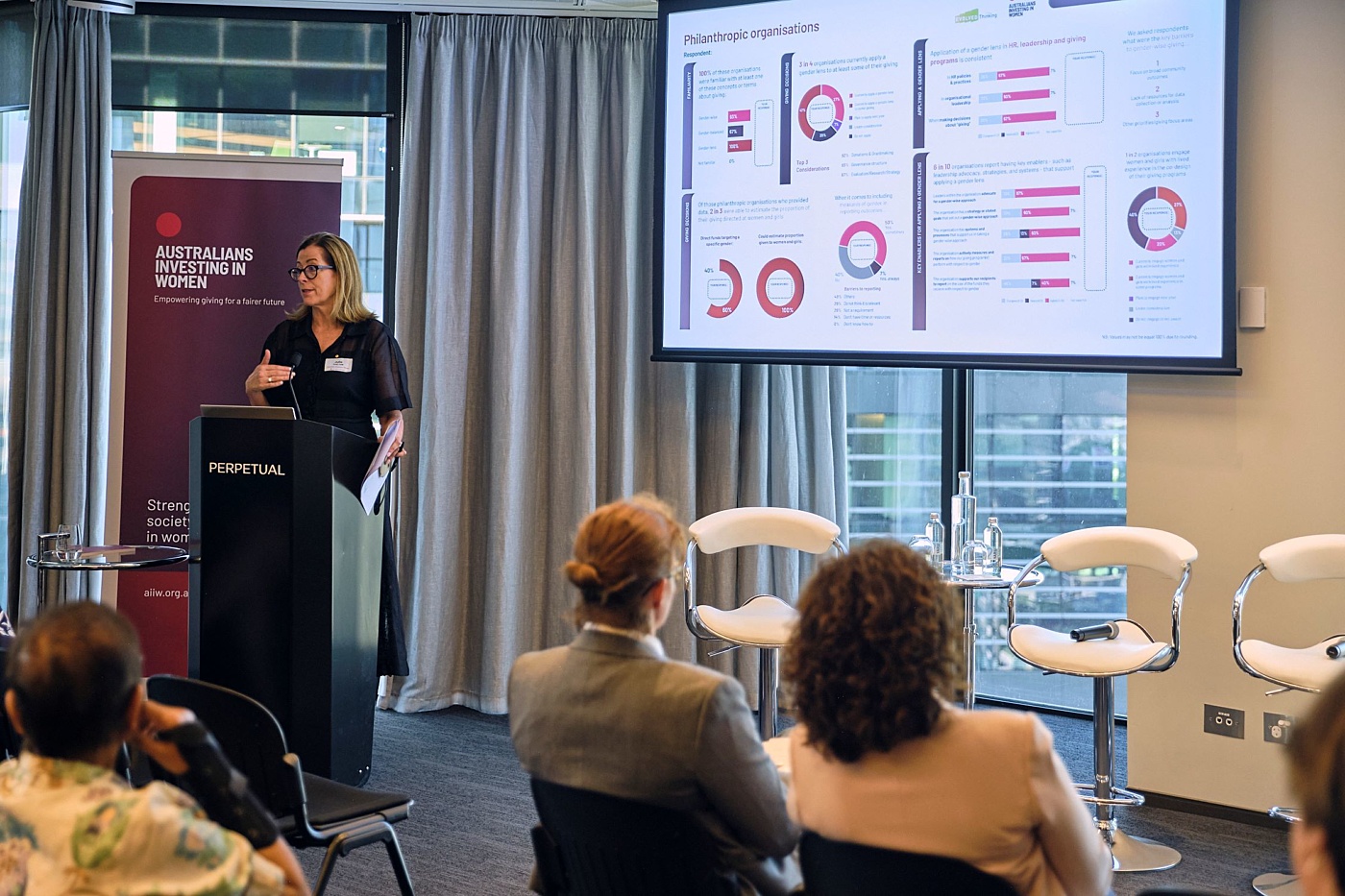
Corporate and philanthropic organisations are increasingly engaging women and girls to help co-design giving programs through a gender lens according to a new study.
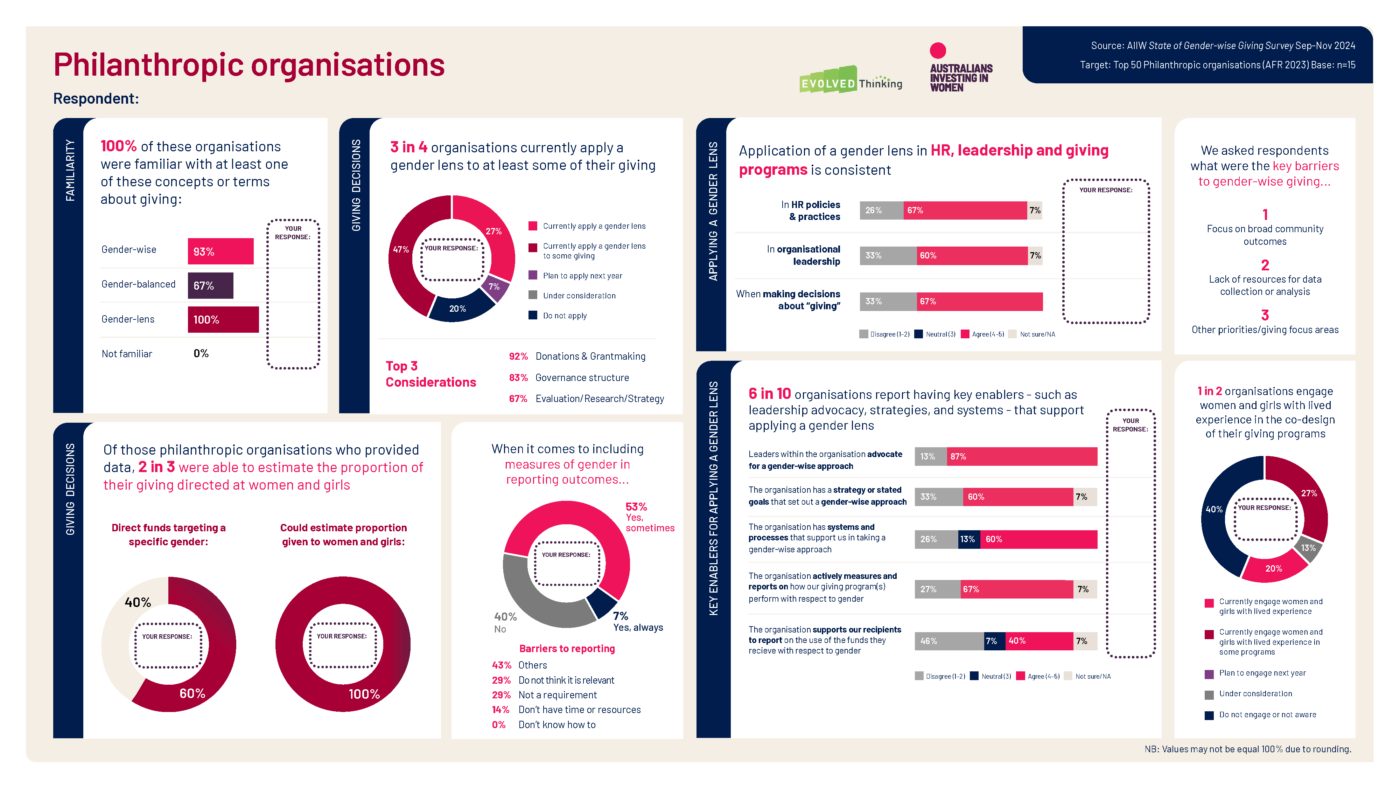
The Australians Investing in Women (AIIW) State of Gender-wise Giving Survey 2024 revealed that one in three corporates and one in two philanthropic organisations are actively working to ensure the voices of women are heard and that their giving needs are addressed.
AIIW said the inclusive approach not only empowers women and girls but also leads to more effective and meaningful outcomes.
First conducted in 2023, the survey reviews the philanthropic efforts of the Australian Financial Review Top 50 corporate and philanthropic organisations in relation to gender equity and giving.
The annual snapshot provides a benchmark against which the nation’s leading giving organisations can assess their gender-wise giving strategies, while also helping the not-for-profit sector and policymakers to better understand the degree of gender-focused philanthropic giving in Australia.
The 2024 survey found:
In philanthropic organisations, in contrast, applications of a gender lens in HR, leadership and giving programs were consistent.
The survey also revealed a 41% rise in awareness among corporate and philanthropic donors about the work of AIIW.
“Despite being a modern and sophisticated economy, harmful gender norms persist, limiting equal power and opportunities in both domestic and professional spheres. This inequality hinders individual and collective progress.”
Political sensitivity: Trustees’ individual interests and the part-time nature of their roles can make it difficult to align gender-wise giving with broader organisational strategies.
Knowledge gaps: Trustees often lack the necessary training and insights to prioritise gender equity in their organisations’ giving strategies.
Influence of founder and family interests: Family foundations continue to be influenced by the wishes of founders or family members, influencing the focus (or lack of) on gender equity in giving decisions.
Lack of formal tools and processes: Many organisations, particularly those in the early stages of their philanthropic efforts, lack the formal tools, systems, and processes to confidently measure and track gender-wise giving.
Appetite to implement: Some organisations are concerned that imperfect assessment is worse than no assessment.
AIIW CEO Julie Reilly said the survey findings served as a call to action for organisations across the corporate and philanthropic sectors to better integrate gender equity into their strategies and operations.
“As we face the reality indicated by the World Economic Forum that it will take 134 years globally to achieve gender equality, we must act urgently to ensure future generations inherit a fairer, more inclusive world,” she said.
Reilly said Australia still ranked 24th on the Global Gender Gap Index.
“Despite being a modern and sophisticated economy, harmful gender norms persist, limiting equal power and opportunities in both domestic and professional spheres. This inequality hinders individual and collective progress.”
Reilly said a gender lens was not just a tool but a critical inquiry that uncovered unconscious bias and addressed harmful gender norms, enabling the design of research and programs that truly advance gender equality.
“I often say that a gender lens and a climate lens are foundational.
“Everyone has a gender identity that shapes how they experience the world, just as we all share the experience and responsibility living on this planet,” said Reilly.
“Beyond these, there are many other vital considerations – such as age, ability or disability and ethnicity – that are critical to understanding and addressing systemic issues.
“However, gender is a powerful starting point.”
Reilly said in the philanthropic world, people often talked about systems change.
“Gender is one of the most defining systems. You can't drive meaningful systems change without addressing gender."
While acknowledging a high level of awareness of the value of implementing a gender-wise approach to giving, the report found many organisations continued to face significant barriers.
Gender Compass sets right direction for women's rights
Posted on 30 Sep 2026
There's been a lot of talk about AI this week, and some of it has been frightening. So, is AI good…

Posted on 30 Sep 2026
After the biggest AFL game of the year, one player proudly wore the flag of his birth country and…

Posted on 30 Sep 2026
At 21 years old, Tate Donohoe is the founder of Ecodia, an AI-assisted software development company…

Posted on 30 Sep 2026
I am checking if this is in the right spot. Let's see.
Posted on 30 Sep 2026
More than 200 fully funded Centre for Social Impact (CSI) scholarships will help equip for-purpose…

Posted on 30 Sep 2026
Personal stories are among the most powerful tools a charity can have to raise funds and awareness,…

Posted on 23 Sep 2026
In his new book Our Place, policy expert Matt Lloyd-Cope argues that housing must be at the heart…

Posted on 23 Sep 2026
There are solutions to counter the rise of One Nation but they might not be residing in the mess…
Posted on 23 Sep 2026
A just-released major global survey of charities has found that demand for charity assistance has…
Posted on 23 Sep 2026
Fresh from welcoming delegates to last week’s Philanthropy Australia conference in Brisbane,…
Posted on 23 Sep 2026
A national strategy to develop Australia's regional cities is needed to break the housing…

Posted on 23 Sep 2026
Eight years after a report to Treasury first suggested the charities regulator should be more…