Nicko Test
Posted on 28 Jan 2026
Headline 2 Headline 3 Headline 4 Headline 5 You’re in a desert walking along in the sand when all…
Posted on 14 May 2024
By Matthew Schulz, journalist, Institute of Community Directors Australia

Nearly 1000 coders, data scientists and artificial intelligence experts have converged to witness a national battle to see who has the skills to solve one of the toughest environmental challenges in tech: making batteries work better and making energy markets work smarter.
In simultaneous events in Melbourne and Sydney on Wednesday May 8, talented teams pitted their abilities against each other in the AI Green Battery Hack.
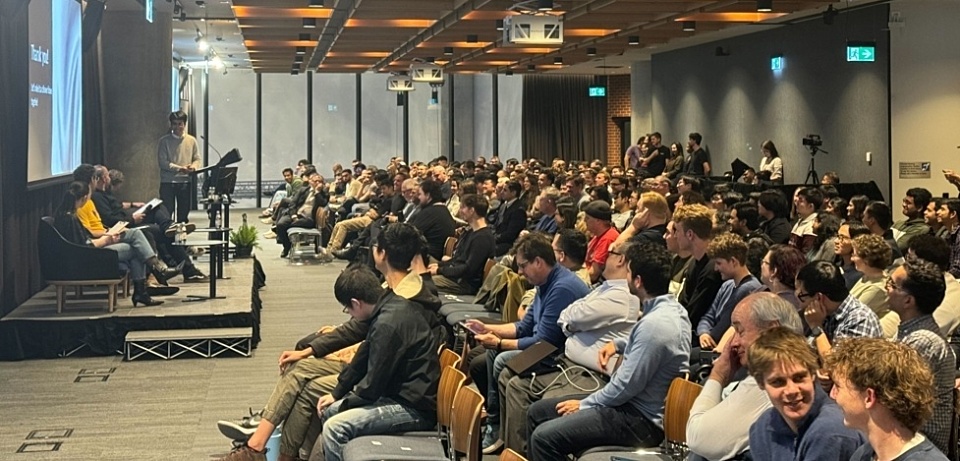
While 700 code crunchers gathered at the Melbourne Connect innovation precinct in Carlton, another 250 descended on Amazon Web Services (AWS) headquarters in Sydney. Hundreds more watched a live stream of the event.
Coders competed for two prizes, the first of which was decided on the night. This saw participants required to design an AI solution that could help in the running of Australia's energy market and to pitch it to the judges and live audience.
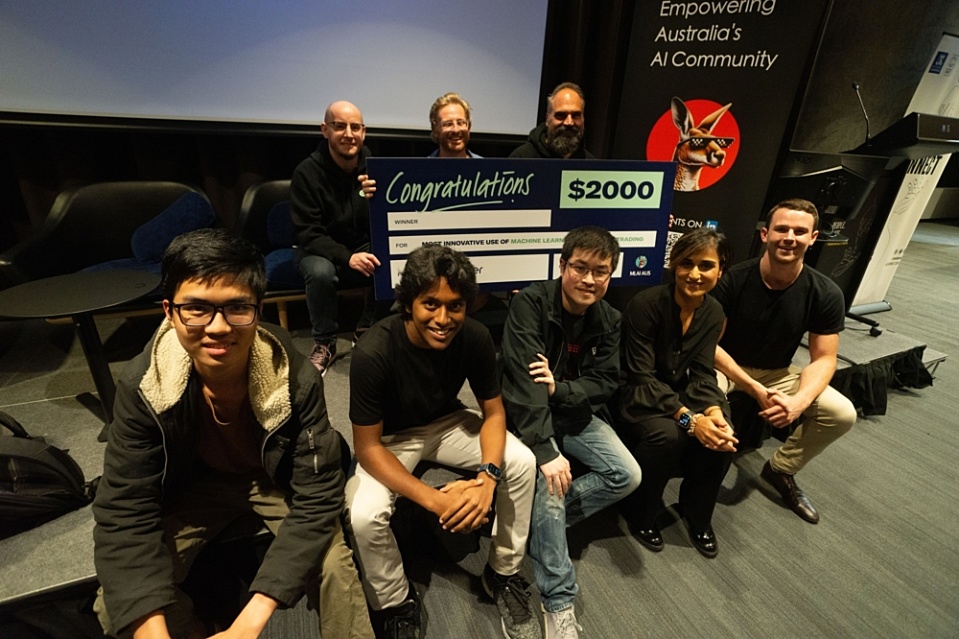
Melbourne’s Omega4 took out the top spot and a $2,000 prize for an “electricity grid price spike identification algorithm”, while runner-up Accuracy Maker, from Sydney, won $1,000 for a trading mechanism that relied on neural networks to optimise solar battery farms.
Competition for the other prize was still underway at the time the Community Advocate
was published: Participants were required to use machine learning (AI) to build an algorithm that would take charge of a simulated battery and rooftop solar panel set-up, the same kind of set-up many Australians have in their homes. Every five minutes, the algorithm chooses whether to charge the battery from the electricity grid (paying the current spot price) or discharge to the grid (earning the spot price). These algorithms have been trading live on the energy market since the April 20, and participants will be awarded from a $3000 prize pool in proportion to the amount of money their algorithm actually made.
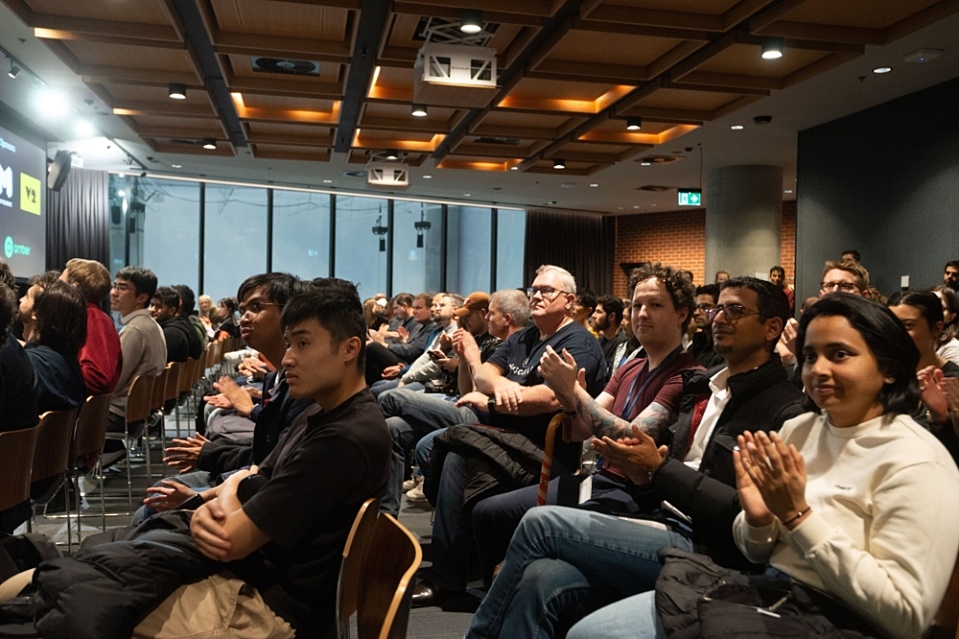
The nation’s biggest AI hackathon is the brainchild of Melbourne Machine Learning and AI Meetup (Melbourne ML/AI), now nine years old.
Professor Eduard Hovy, executive director at Melbourne Connect and a world-recognised expert in AI, told the Melbourne audience that the latest iterations of artificial intelligence could power Australia's transition to carbon net zero, by making use of a decentralised electricity grid and private batteries.
In Melbourne, Deputy Lord Mayor Nicholas Reece urged those in attendance to continue Melbourne’s rich history of innovation. In Sydney, NSW Greens MLC Cate Faehrmann praised participants’ role in acting on climate change.
ML/AI co-founder Jaime Blackwell said the competition aimed to advance battery technology to meet Australia’s climate goals. The hackathon encourages the development of AI-driven solutions to enhance the efficiency and integration of renewable energy sources into the national grid.
“Our aim is to help by proving the commercial viability of batteries, which are one of the major bottlenecks in the energy transition, and also introducing a cohort of new data scientists to the concepts and tooling present in the energy grid,” she said.
Posted on 28 Jan 2026
Headline 2 Headline 3 Headline 4 Headline 5 You’re in a desert walking along in the sand when all…
Posted on 28 Jan 2026
Headline 2 Headline 3 Headline 4 Headline 5 You’re in a desert walking along in the sand when all…
Posted on 28 Jan 2026
Headline 2 Headline 3 Headline 4 Headline 5 You’re in a desert walking along in the sand when all…
Posted on 28 Jan 2026
Headline 2 Headline 3 Headline 4 Headline 5 You’re in a desert walking along in the sand when all…
Posted on 28 Jan 2026
Headline 2 Headline 3 Headline 4 Headline 5 You’re in a desert walking along in the sand when all…
Posted on 28 Jan 2026
Headline 2 Headline 3 Headline 4 Headline 5 You’re in a desert walking along in the sand when all…
Posted on 28 Jan 2026
Headline 2 Headline 3 Headline 4 Headline 5 You’re in a desert walking along in the sand when all…

Members Only
Posted on 19 Nov 2025
When it comes to loyalty to car brands, it can be confusing who we should support, and, even more…

Posted on 19 Nov 2025
The not-for-profit (NFP) sector has been urged to press on with reforms outlined in a…

Posted on 19 Nov 2025
It pays to check your receipts. The Australian Charities and Not-for-profits Commission (ACNC) has…
Posted on 19 Nov 2025
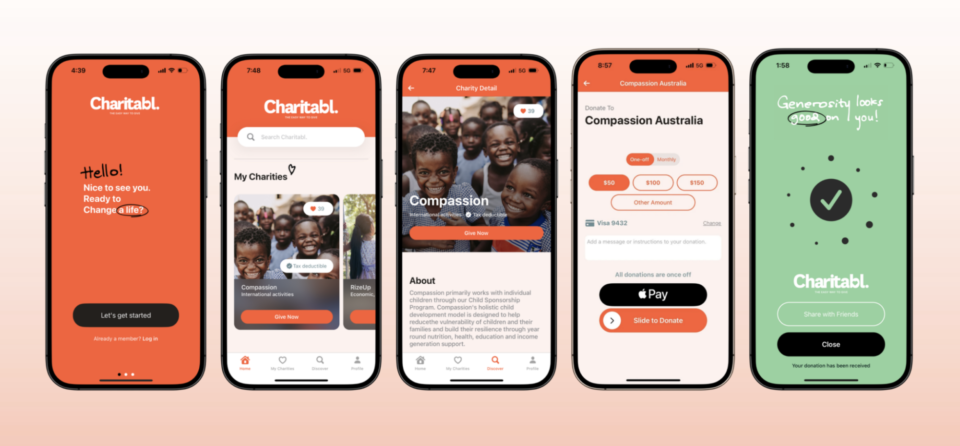
Recent questioning of the model behind Charitabl is a mix of misunderstanding and potentially…
Posted on 19 Nov 2025
Lora Inak is the author of the Cockatoo Crew books, a new children’s fiction series (illustrated by…