
Innovation: an optional extra or a governance go-to?
Posted on 13 Aug 2026
Innovation isn't just a buzzword, and it isn't just about technology. It’s a necessary part of…
Posted on 22 Jul 2026
By Matthew Schulz, journalist, Community Directors

Beyond Bank puts communities and social impact at the heart of what it does, but that’s just good business, according to its head of strategy and community engagement.

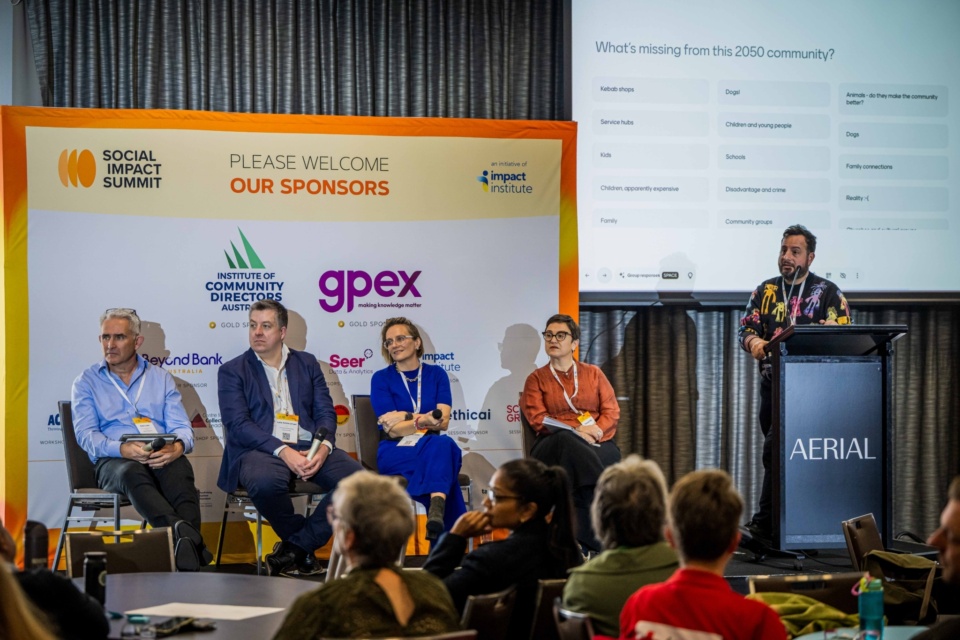
Peter Lalor, was at the Social Impact Summit in Sydney to argue that strong communities needed affordable housing if they were to thrive, and that done well, “financial infrastructure can be community infrastructure”.
"The communities that people live in, the communities that people feel like they belong to, is heavily dependent on the communities they can afford to actually live in and belong to," he told a panel discussion examining what Australia communities should look like in 2050.
Alongside representatives from the Community Housing Industry Association of New South Wales, the Planning Institute of Australia, and impact strategy consultancy Pathmaker, Lalor acknowledged that housing affordability was a “massive problem that needs to be solved … if we're to realise this vision for belonging in communities by 2050”.
He said recent federal government moves to address housing affordability were imperfect, but having been "resigned to never actually seeing a government that had the courage to actually try and do something systemic about housing affordability … I think you've got to give them marks for having the courage to do something."
Beyond Bank saw itself as contributing to solutions in which ownership structures “keep value flowing back into the communities that create it”, he said.
“You would probably expect this coming from a mutual bank or a customer-owned bank [but] I would hope that by 2050, communities are financed by the members of those communities and the capital in those communities stays in those communities.”
He said the “circular approach” to capital and finance echoed the work of mutual banks, which helped people who were otherwise excluded from home ownership.
“They came together and formed collectives to finance the purchase of homes … and in effect they owned the communities that they lived in.”
He said traditional approaches to finance were “extractive rather than contributory … in other words, they take money out of communities and they redirect it to other places, and I think that's the source of a lot of our problems and challenges around affordability”.
He said he saw a future where collectives, co-ops, mutuals and community cooperation could “finance the type of community that [people] want to live in”.
But even if housing supply and urban design set the right physical conditions for great social connections, they did not guarantee it, he said.
And strong communities had a great economic benefit, he said, with the estimated cost of loneliness, in the billions of dollars, now a “measurable economic drag, not just a social issue”.
Speaking to Community Directors on the summit’s sidelines soon after the panel discussion, Lalor said banks were integral to communities.
"Banking plays an important role in creating social impact regardless of the ownership model," he said. "But I think it's clearer and simpler for a mutual because our members are also our owners. That creates a circular model where the profits generated through member banking activities can be reinvested to benefit those same communities."
That understanding informed the bank’s business strategy as well as how it worked with many not-for-profit partners, he said. Beyond Bank is one of Australia’s biggest member-owned banks.
"We want to help organisations establish innovative programs and build initiatives that can continue supporting communities in a more self-sustaining way."
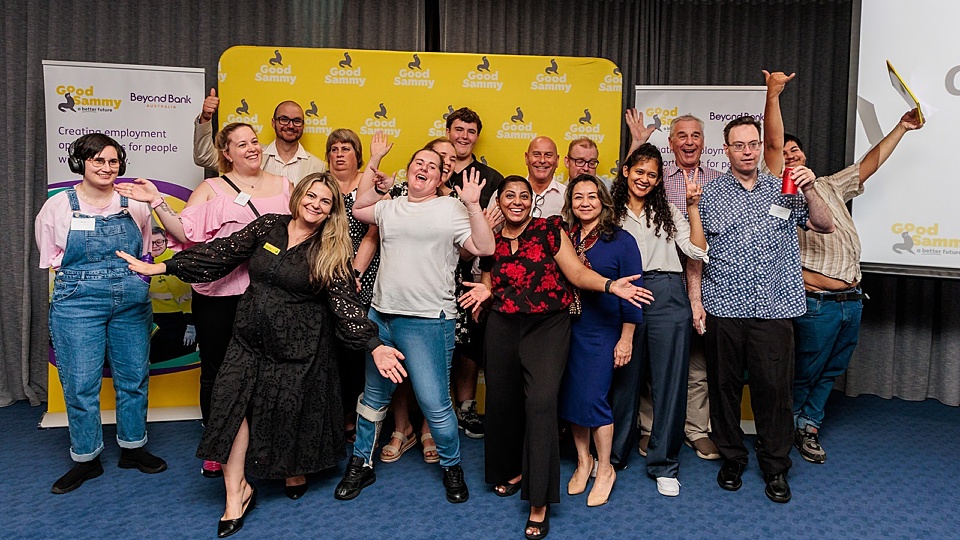
The Beyond Bank Foundation – a registered charity with bank leaders on the board – is one of the main drivers of the bank’s community impact, building on the legacy of the merger of 67 smaller credit unions and building societies, and the bank’s status as a B Corp.
The foundation last year distributed about $427,000 to charity groups, up from nearly $216,000 the previous year, and it has donated millions over nearly two decades.
Two years ago, the foundation sharpened its focus to the three funding pillars of housing affordability, financial wellbeing, and disaster recovery – areas where the bank felt it could make a bigger difference.
Explaining the shift, Lalor said housing affordability was clearly a “significant issue”, financial wellbeing was a response to cost-of-living pressures, and supporting recovery was a priority for the foundation amid the growing frequency of natural disasters.
“We'll continue focusing on those areas for now, although they may evolve over time as community needs change."
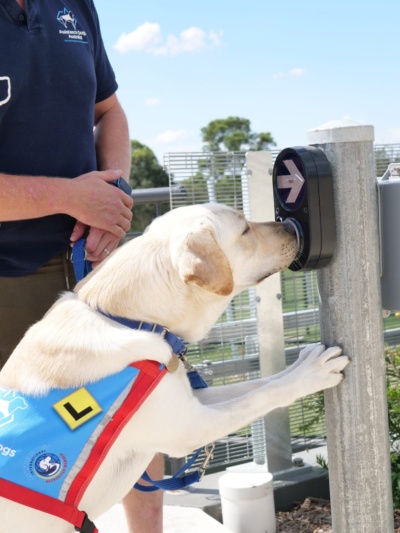
The foundation currently supports 14 organisations in five states, addressing homelessness and housing, financial counselling, crisis support, family violence services, and community recovery.
"It's also important that our investment helps organisations become more sustainable over time. We want to help organisations establish innovative programs and build initiatives that can continue supporting communities in a more self-sustaining way."
Lalor said that organisations wanting to win support could contact the foundation or connect with a community development manager in their region, with applications assessed based on alignment with the pillars and potential social impact.
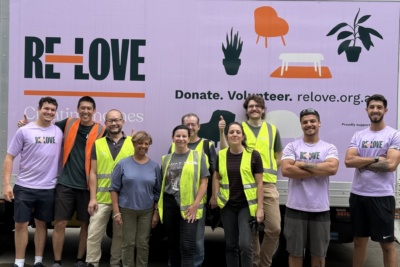
The foundation's relationships extend beyond grantmaking. Indigo Junction, a Perth-based not-for-profit working with people experiencing homelessness, had been a community partner for more than three years before approaching the bank for business finance. A $2 million loan helped Indigo to establish a $17.7 million youth crisis and transitional housing project in Midland, providing 36 transitional housing options for young people fleeing homelessness or domestic violence, according to the bank’s 2025 corporate report.
Beyond its philanthropic program, the bank has a low-fee, higher-service “partnerships” offer that has been taken up by more than 6,325 not-for-profits, sporting clubs, and other community organisations, while a “Community Reward Program”, in which supporters open linked savings accounts and the bank directs a portion back to their nominated cause, contributed $687,155 to more than 430 clubs and organisations in 2024–25.
Beyond Bank is a Community Directors partner.
Download our FREE 42-page Measuring What Matters guide for a quick handle on evaluation principles and frameworks, outcomes and data gathering.
Then, visit the outcomes measurement section of our website for answers to '10 questions every board member needs to ask about measuring outcomes', evaluation templates, and data and privacy policies.
Find more resources in our tools and resources section.
Posted on 13 Aug 2026
Innovation isn't just a buzzword, and it isn't just about technology. It’s a necessary part of…

Posted on 13 Aug 2026
Most new purpose-driven projects falter in the early phase because there’s no one assigned to the…

Posted on 13 Aug 2026
Election campaigns create a rare opportunity for not-for-profits, community groups and campaigners…
Posted on 13 Aug 2026
Charities Minister Andrew Leigh – a former professor of economics at the Australian National…

Posted on 13 Aug 2026
Not-for-profits are full of people with great ideas, but that doesn’t mean they are set up for…

Posted on 13 Aug 2026
As a teenager, I attended summer camp for seven years, first spending two weeks at a time camping…
Posted on 13 Aug 2026
One of the advantages of managing the building where my organisation, Our Community, has its…

Posted on 05 Aug 2026
Australia may be living through an erosion of trust in institutions and a breakdown in social…

Posted on 22 Jul 2026
For many people, ESG sounds like corporate and business jargon. For not-for-profits, it might be…

Posted on 22 Jul 2026
Beyond Bank puts communities and social impact at the heart of what it does, but that’s just good…

Posted on 22 Jul 2026
The Not-for-profit Agenda, airing at 12.30pm AEST on Thursday, August 20, is Community Directors’…

Posted on 22 Jul 2026
New research from The Smith Family shows senior secondary school transitions are difficult and…